

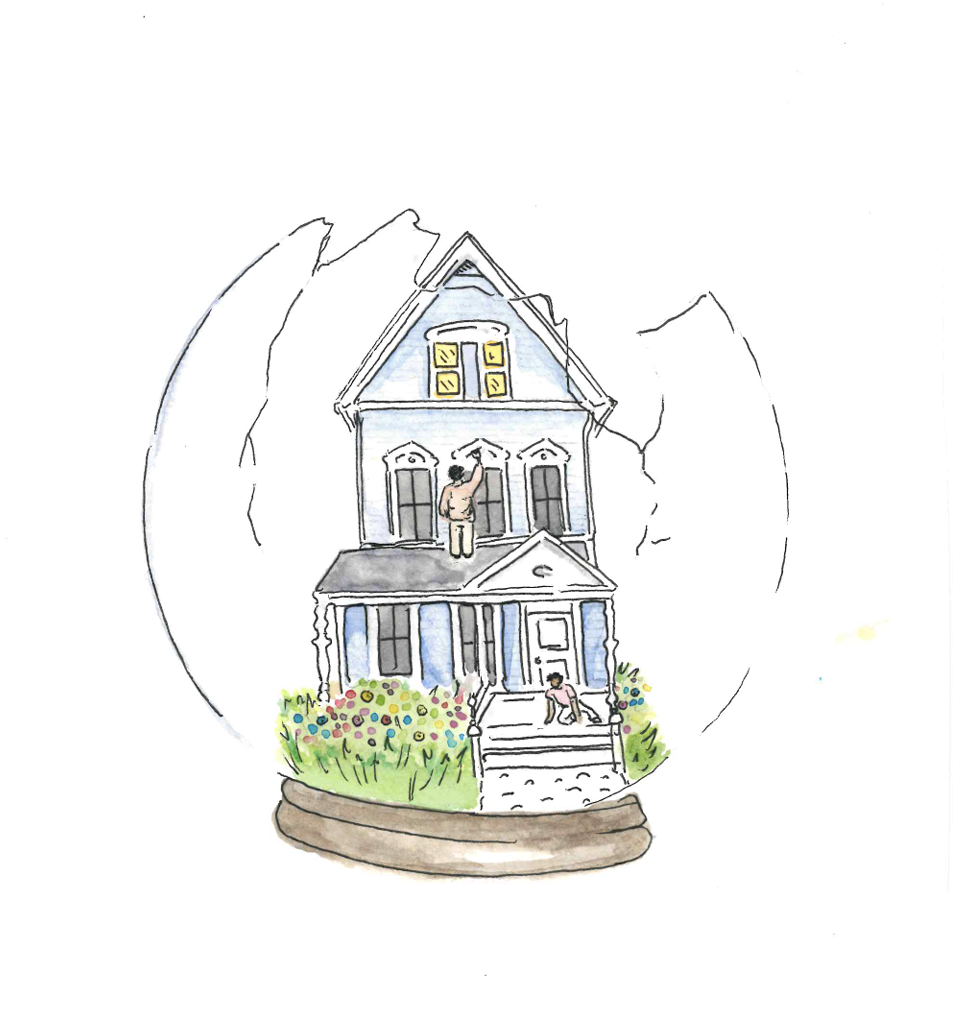
The air in Pinegrove smells like the inside of a parked car, but there’s grass here, and wild violets, so to my brother and I, this is Eden. Our great aunt takes us on the Lakeland bus once a week to escape the city’s stench. This is the house of no one she wants us to meet, but it’s always empty when we arrive. We are mean boys, jaded with the city’s center, but these simplicities — sun, trees, air — make us light, easy. Our great aunt sends us out to play while she works, cleaning the house in strict solitude. In autumn, we dive into piles of leaves we rake ourselves; in winter, we make snowpeople, and in spring, we watch them melt. We spend our summers fighting in the above-ground pool, whipping wet hair at each other while our great aunt bakes in the sun.
Time passes. Our legs grow furred and our faces crater. We chase girls until they are out of breath. But though we are old enough to go through Port Authority alone, the house stays the same. We watch Psycho in the basement, drink dusty garage beers on the wicker couch. We learn the house’s secret, but do not speak it to each other. Instead, we adopt a creeping fear that the owner will return to find us, our dark skin and blunt words and secret gentleness, and punish our trespass in the American tradition. But nobody does. To return to Pinebrook is to return to the world inside a snowglobe. The grass, green as paint; the people, simple and smiling; the house, quaint, enclosed, and unchanging.
I enroll at Hunter College, and the house stays the same. Our great aunt passes, and the house stays the same. I become a lawyer and make a living shielding criminals from jail, and the house stays the same. My brother becomes a man who gets people what they need. He conducts his business on flip phones under streetlamps hung thick with sneakers. But when we roll into the driveway in our flashy cars, the house washes our grime from us, remakes us sweet and clean. We do not bring our women to Jersey. We return to Pinebrook, it is with a tenderness that no lover of ours will ever know.
One evening, my brother lumbers down the stairs, and his foot cracks through the step. We pay a carpenter and watch him work, breathing down his neck, as protective over the house as if it were our own. He leaves. The work, we realize, is ours to do. We replace the rotted porch and fix the plumbing. We paint the clapboard exterior. We stop dreading the owner’s return: old fear is replaced by a sense of duty, of stewardship, of care. There are prices to pay for our serenity. We are not the only secrets shielded by this house. So we custodian it; keep it clean. Sleep in its beds, wash its curtains, stock its pantry with rice and bouillon cubes. We dust windows and air the smell and compost the corpses in the attic. And in return, the house opens up to us, two hardened men undeserving of such a monastery: our tenderness, our sanctuary, our breath of fresh air.
Special thanks to G.B. and K.B.
—Chloe Shiffman
Illustration by Jane Callanan.