

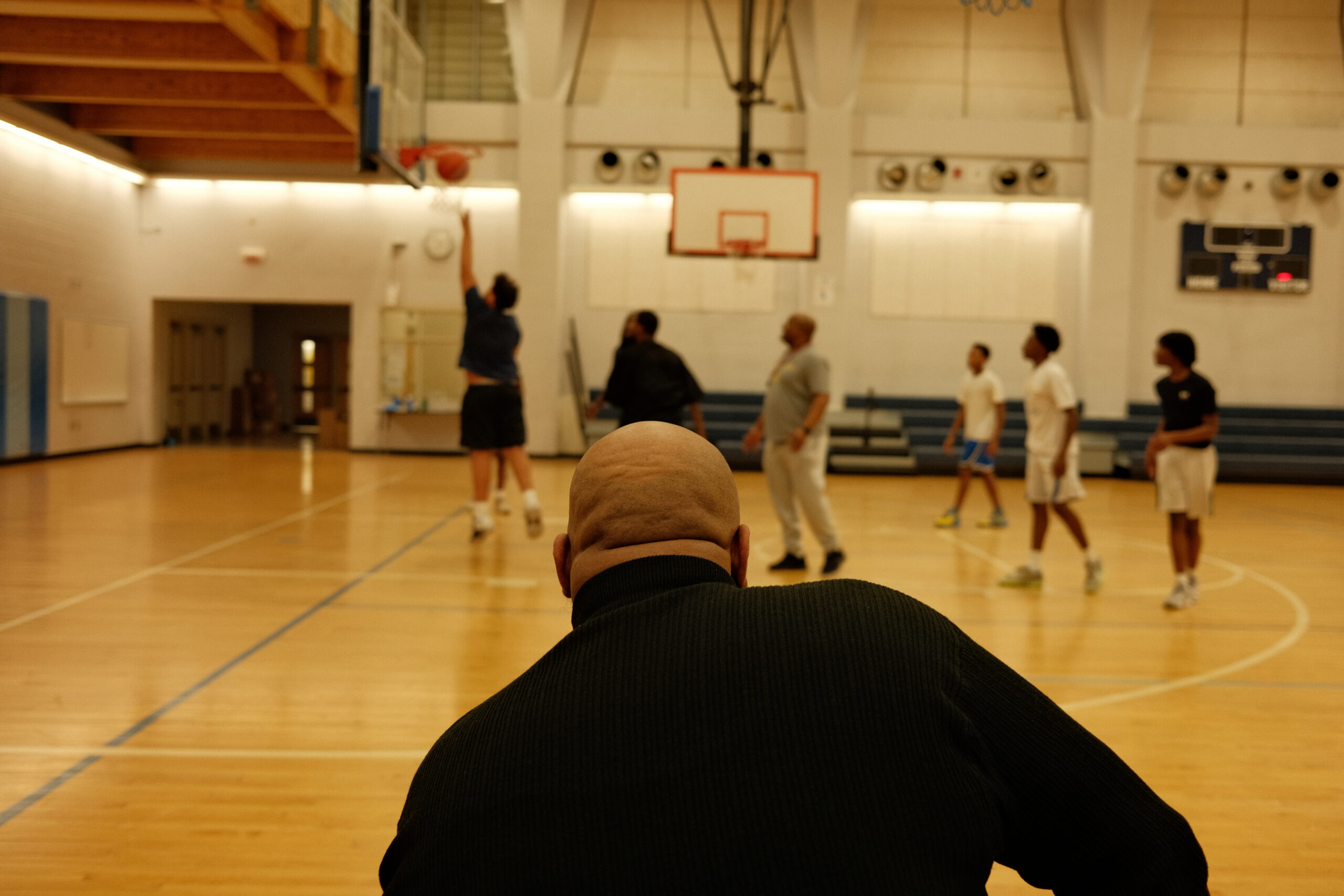
When the court is safer than the streets, a youth basketball team reckons with gun violence.
When Terrance Edwards joined the New Haven Heat basketball team as a seventh grader, his coaches taught him to tie his shoes. That year, in 2014, he left New Haven for the first time in his life when the Heat played a tournament in New York. One of his coaches, Rick Kennedy, remembers the drive to New York. They were passing through Bridgeport when Terrance tapped him on the shoulder and pointed at the tall buildings in the distance. “Are we in New York City?” he asked.
Terrance is now 25 and works as a disability service provider. He still attends the Heat’s practices when the coaches need him and talks to his old coaches regularly. “Coach Rick was basically like a second father to me,” he said.
Since 2014, Coach Rick has been the head coach and program director for the New Haven Heat. Founded in 2002 by Frank Redente Jr., now the city’s Ward 15 Alder, the Heat is a youth basketball program with 150 students across elementary, middle, and high school divisions. Redente founded the program to provide kids a productive way to spend their time outside of school and a distraction from the difficult realities of living in the inner city. He hoped that, in doing so, the program would keep kids safe from crime, and especially from gun violence. The team is also incredibly successful at teaching kids basketball. Over the years, they’ve won three national championships and sent dozens of their kids to play at the college level.
The team meets twice per week, usually at Fair Haven School and Amistad Academy Middle School. There, coaches run the kids through shooting and ball handling exercises. In a hodgepodge of colorful basketball shorts and t-shirts, kids dribble and pass balls back and forth, racing into layups as part of a shooting drill. Coach Rick, with his graying beard and broad figure in a black turtleneck, is an imposing presence on the bleachers, where he yells encouragement and stops players for mistakes.
For the Heat’s coaches, having practice as frequently as possible is a matter of saving kids’ lives—keeping kids at practice minimizes the time they spend unsupervised in the city. In 2025, one-third of victims of homicide due to gun violence were younger than 19. Last year, an 8-year-old died from an accidental shooting on Dewitt Street in the Hill. Earlier this year, a 13-year-old died driving a stolen car.
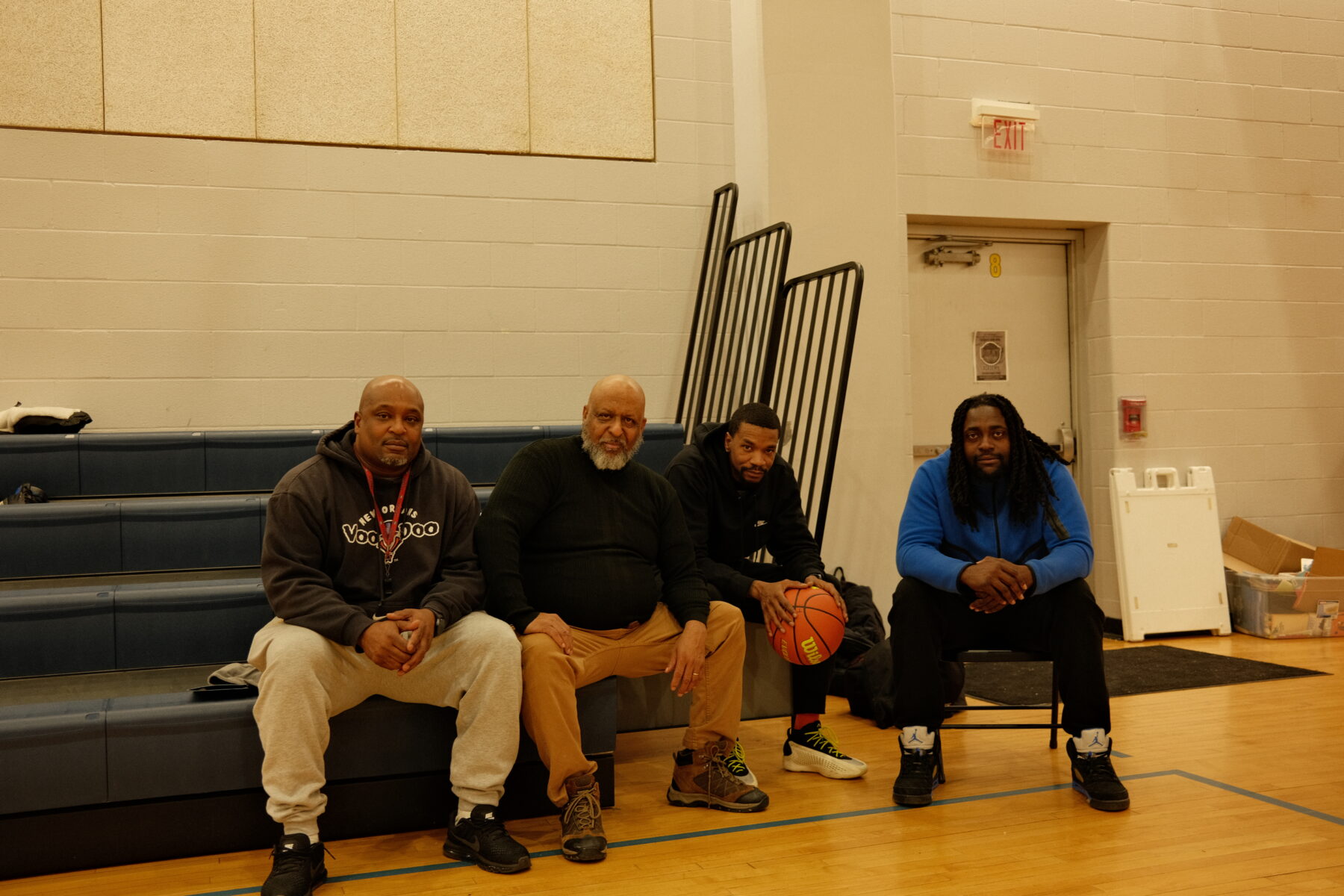
From left to right: assistant coach Carl Bond, coach Rick Kennedy, Tyshan Smith, Deandre Whyte.
Coach Rick and his son, Doc Kennedy, who now works at Amistad Academy Middle School, run the team together. When Doc was 16, TJ Mathis, his brother and Coach Rick’s stepson, was killed in a shooting on South Genesee Street in New Haven’s West Hills neighborhood. Mathis played Division I basketball at Morgan State University before transferring and playing Division II at Mercyhurst University. He died the day before he planned to sign a contract with a semi-pro team.
In 2025, the Heat lost a player to gun violence. That September, a 13-year-old boy shot and killed 15-year-old Kaiden Phillips, a shooting guard for the Heat. In the aftermath of Kaiden’s death, his coaches and teammates, along with the members of the New Haven community, convened in the Fair Haven School gym to grieve together.

A younger Kaiden Phillips. Credit: New Haven Heat Twitter
Isaiah Turner, a 14-year-old freshman who plays point guard for the Heat’s high school team, was a close friend of Kaiden’s. After his death, he often found himself zoning out in class and thinking about Kaiden throughout the day. These days, he still finds it difficult to articulate his grief. “It’s pretty hard for me to talk to anyone about it,” he said. He remembers Kaiden as someone the team relied on during games. “Every time you needed a bucket, that’s who we would go to.”
Jahmala Steele, an eighth grader who plays small forward for the Heat’s middle school team, said that after Kaiden’s death, his mother wouldn’t let him walk anywhere by himself. “She said, it’s either you get picked up or you’re not going,” he recalls.
The players took it upon themselves to help their teammates. At practices after Kaiden’s death, Carl Bond, an eighth grader at Hamden Middle School, said he tried his best to keep morale high. His goal was to make sure “everybody wasn’t getting on each other by mistake, getting mad, sulking,” he said. “Trying to lift everybody up.”
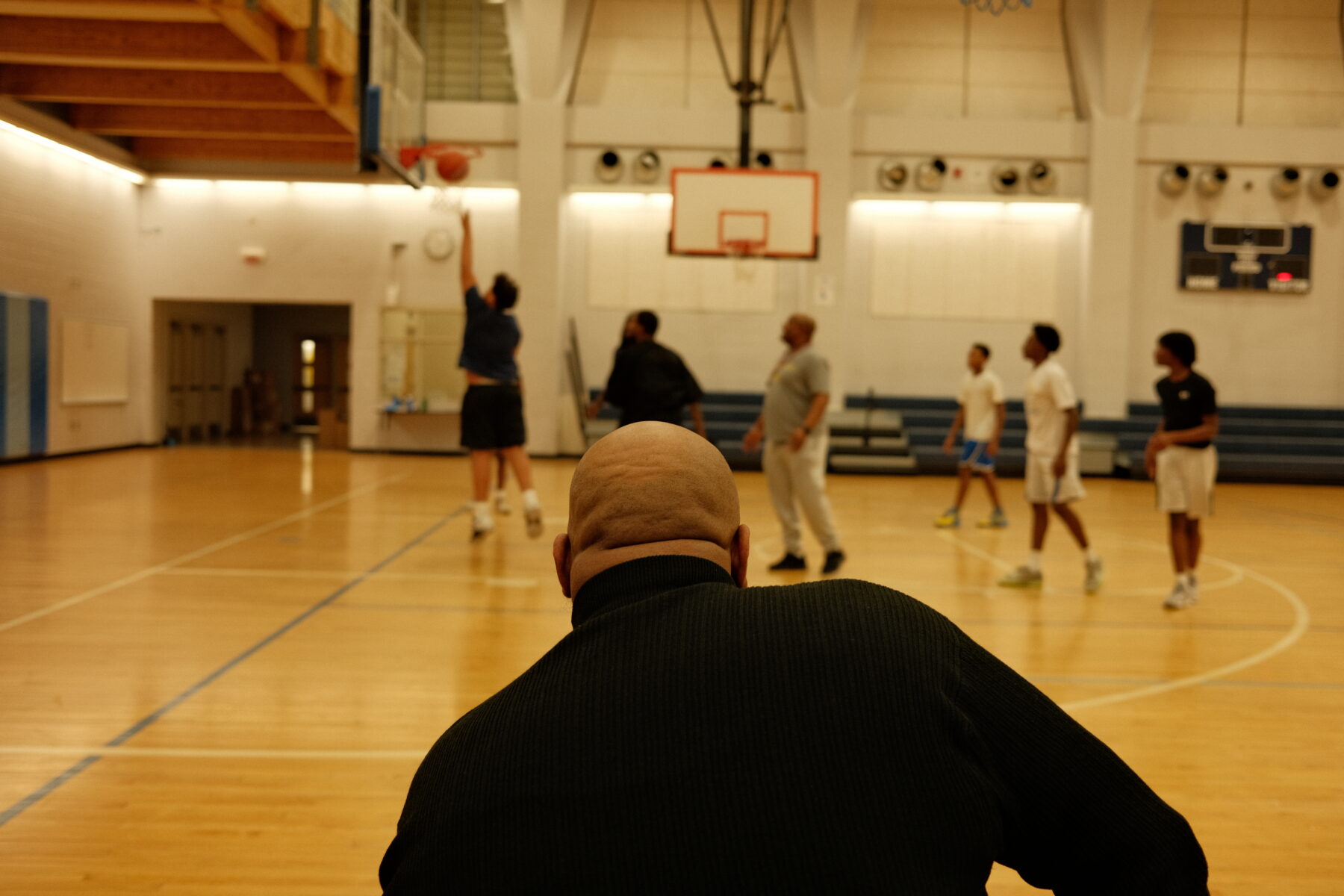
Coach Rick Kennedy at practice
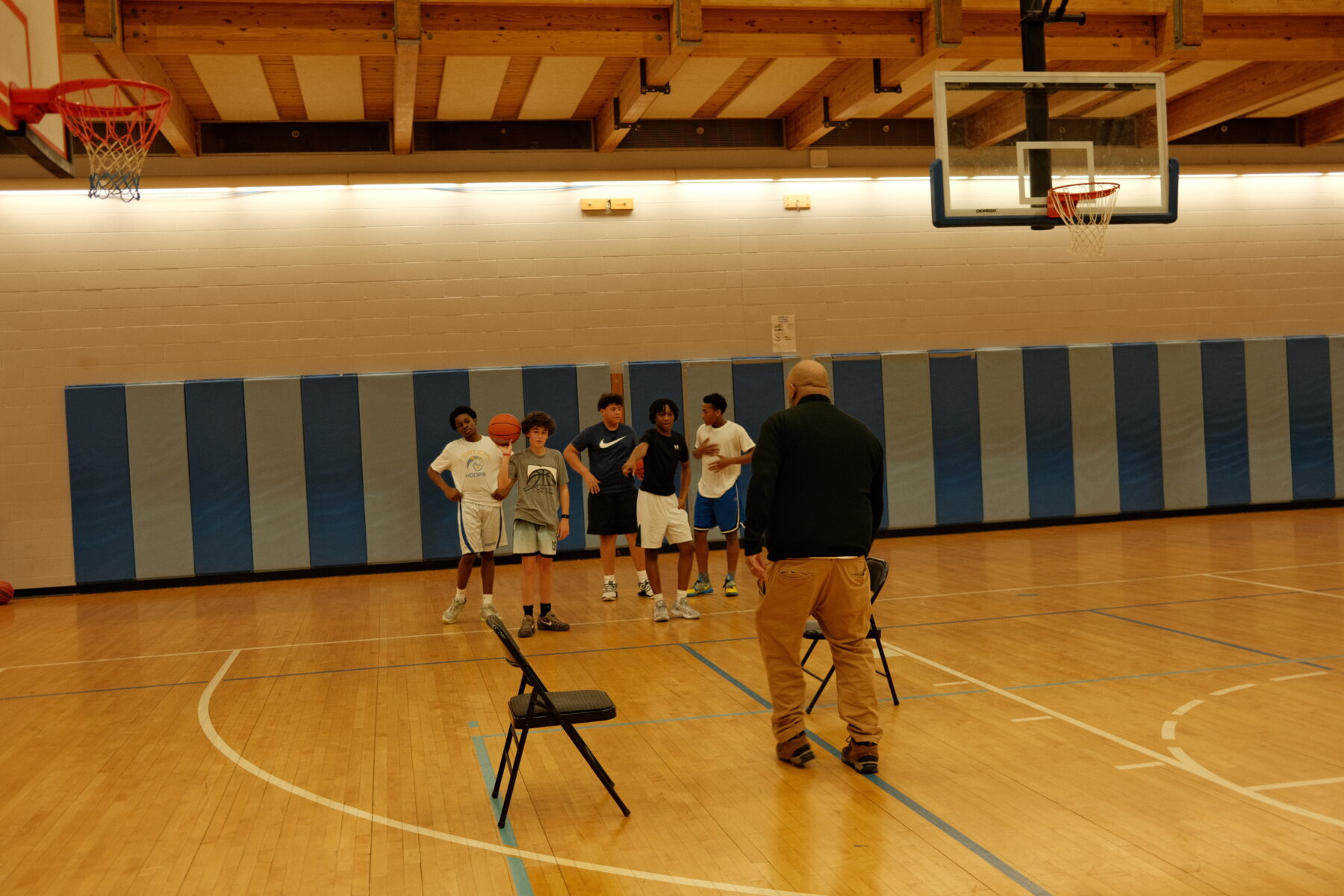
From left to right: Demari Radcliffe, Matteo Pace, Carl Bond Jr., Jahmala Steele
The Heat has about fifteen coaches— all unpaid—who work other jobs during the day, many in New Haven public schools. They rely on regular donors and fundraising efforts to support travel expenses and team uniforms. When the kids don’t have the money to pay for their own meals or the team comes up short on funding for travel expenses such as hotel rooms, the money comes out of coaches’ pockets.
William Young, now 25 and studying for his HVAC license, remembers calling Coach Rick ten years ago from the hospital. His mom, a single parent who worked two jobs to make ends meet, had had a severe allergic reaction. Throughout the next several weeks, while William’s mother was in the ICU, Coach Rick made sure William got to practice and was still going to school. When his mom died less than a month later, Coach Rick checked on him and his brothers daily, and gave William advice that got him through the rest of the school year. “He was like a father figure for me. It saved my life when my mom passed away so young,” William said.
The same year that Terrance went to New York City for the first time, his team placed third in a national championship. After the game, he asked Coach Rick for a hug. “That kind of made me melt,” Coach Rick said.
Redente stepped back from the team in 2014, passing it on to Coach Rick and Doc. To Doc, who’s been coaching since he was 18, teaching and being someone the kids rely on doesn’t just change the kids’ lives. “I tell people all the time: just as much as the kids think we save them, they save us. We’re still young men,” Coach Doc said. ∎
Velvet Wu is a sophomore in Davenport College.
Photos by Colin Kim.