

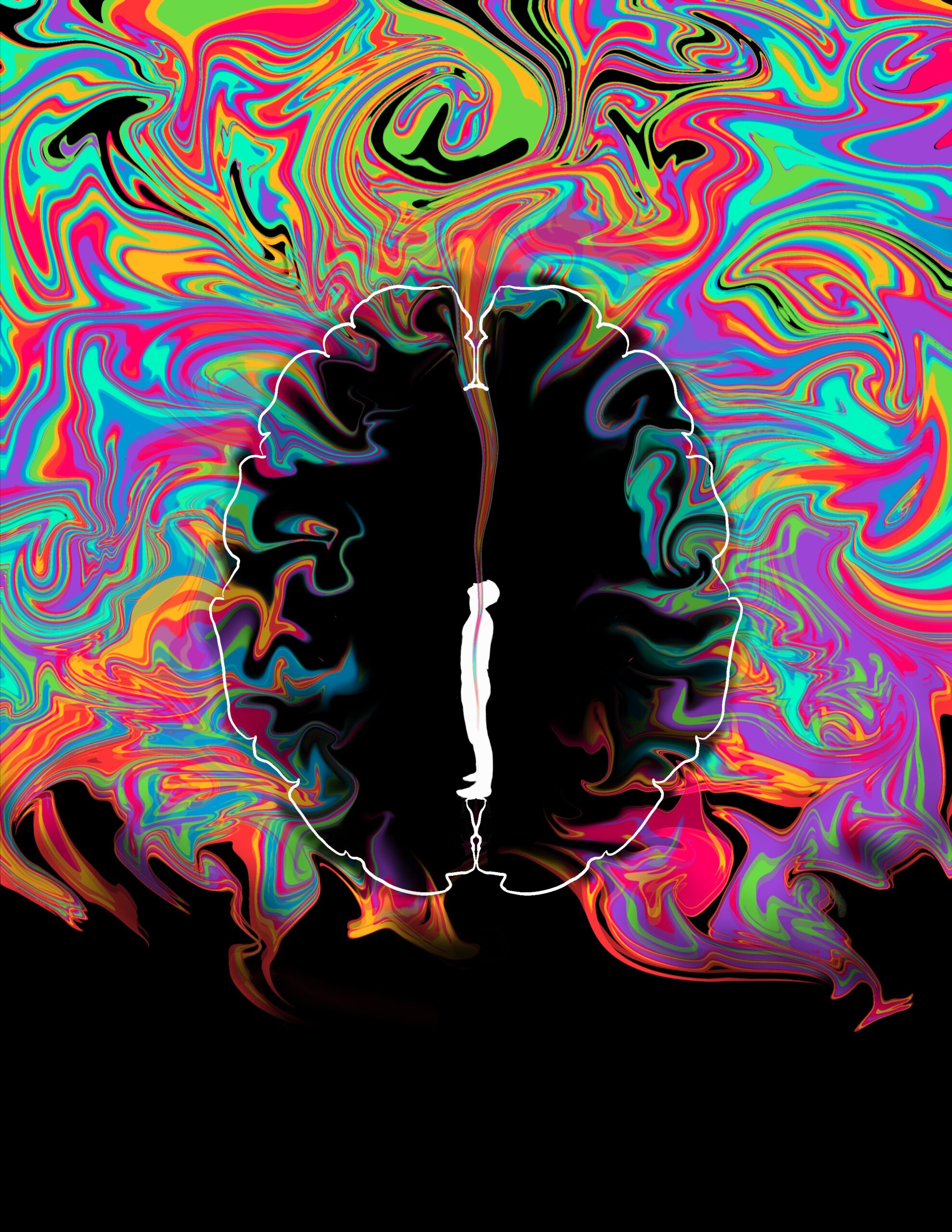
In New Haven, where ketamine was first used to treat depression, a new generation of clinics embraces a contested method of therapy. I spoke to doctors and patients, and tried the treatment myself.
Mike Finoia was about to crash into a wall. Or at least it looked like a wall. He was moving fast, so he couldn’t say for sure. Waterfall of sand, 2D sepia-tinted mirage, khaki-colored stage curtain were other candidates. Mike’s best guess, though, remained wall—promising, at this speed, an audibly bone-crushing mix of pancaking and pulverization. And, stuck in a dreamlike state of moving-but-you’re-not-doing-the-moving, he was meeting it soon.
Mike was right: wall it was. He braced, fate accepted, and resigned to the certainly quick and hopefully painless. But instead, Mike slid through— emerging alive, intact, and glancing over his shoulder to catch the wall dissolving behind him.
This was one of Mike’s first ketamine odysseys, forming part of his canon of particularly memorable sessions. (See also: experiencing “nothingness and everything” as a fleck of dust, being accosted by Donald Trump, travelling as lint-consciousness on his dog’s fur, and successfully infiltrating jungled enemy territory via stealth canoe.) “It gave me the thought of, ‘It’s okay to be out of control, none of us are in control,’” he said. “It’s been years now, and I still think about it.”
Mike has treatment-resistant depression, meaning two or more trials of conventional oral antidepressants have proven ineffective. In 2022, he hit bottom: his whole body ached; headaches, cold sweats, and nausea on clockwork rotations; he barely slept, and when he did, woke with his mind on a hamster wheel of panic and dread, terror-ridden that if he was late for a meeting, missed a phone call, or forgot to wish a friend happy birthday, hell would follow. He was terrified to leave his house, to get into the car, to run into his own shadow.
“It was like a snow globe where everything’s shaking all the time, and suddenly I was in the globe,” he said. He felt like he was running out of time, and started looking for residential treatment facilities. “It was terrifying. I was just like, ‘I need to get help.’”
Mike found it in ketamine. Which, yes—the ketamine of “dude I’m floating” dissociation and of the proverbial “k-hole” of mind untethered from all things earthly. But also: a church grey-area for Mormon wives; a tool for entrepreneurial rut-breaking among the Elon Musk school of techbros; and, a novel and promising intervention for depression, especially among previously treatment-resistant patients.
What we call depression isn’t new. In his fourth century Aphorisms, Hippocrates wrote of melancholia—a distinct disease marked by persistent fears and despondency, poor appetite, sleeplessness, and irritability—which he attributed to an excess of “black bile.” Two millennia later, in the first full-length treatise on melancholy, English writer Robert Burton characterized it as a “disease so grievous, so common…that crucifies the body and mind.” Still—with a lifetime prevalence around 20 percent—depression is likely more common than ever. Cross-cultural studies, for example, suggest a grim gradient: the deeper into modernity, the greater the incidence of depression.
Roughly two-thirds of Americans diagnosed with depression opt for some form of treatment, the most common of which is daily oral antidepressants: SSRIs, SNRIs, MAOIs, tricyclic antidepressants, rogue meds that resist neat categorization. But for one-third of patients, standard medications fail. And, even when effective, they display a four- to eight-week therapeutic lag and carry well-documented side effects: nausea, headaches, sexual dysfunction, emotional numbing.
Enter ketamine. It has proven effective for fifty percent of previously treatment-resistant patients, and it achieves effects within hours. The drug’s promise has made it something of a psychiatric rising star, with the number of clinics in the United States offering ketamine growing from sixty to 2,800 in the past decade alone.
Much, however, remains unknown: how exactly ketamine produces its antidepressant effects; whether treatment should be paired with psychotherapy; the long-term risks of repeated use; the role, if any, of its psychedelic properties in alleviating symptoms.
Yale researchers were the first to discover ketamine’s antidepressant potential, and the Yale Psychiatry Department continues to chart the terrain between promise and unknowns. New Haven is home to three clinics offering ketamine treatment: one white-walled and clinical—and two private clinics leaning into the “psychedelic” of “psychedelic medicine.” Over four months, I spoke to six patients who’ve undergone ketamine treatment, interviewed seven researchers, met with six practitioners, and—because this is The New Journal after all—headed to one of the New Haven centers to undertake my own foray into therapeutic ketamine.
* * * * *
But first, some history. Since the discovery of the first antidepressants in the fifties, depression research and drug development had been structured by the monoamine hypothesis. The hypothesis is simple: depression is caused by deficits in monoamine neurotransmitters—think your canonical feel-good chemicals: serotonin, dopamine, and so on. Antidepressants, according to the model, thus had to act on a monoamine.
But, in 1997, Yale researcher Dr. Charney debunked the model. Experimentally depleting monoamines in healthy subjects, he found, did not induce depression. Though monoamines could be manipulated to improve mood, depression itself wasn’t caused by a monoamine deficiency. (Think of how ibuprofen can alleviate headaches, but headaches aren’t fundamentally “ibuprofen deficits.”) And so: back to the drawing board.
Charney’s mentee at the time was Dr. John Krystal. Now chair of Yale Psychiatry, Krystal was then a young, cutting-his-teeth researcher investigating the role of the neurotransmitter glutamate in schizophrenia. To do so, he turned to ketamine—which transiently increases glutamate levels—and began a series of studies examining its effects in healthy volunteers.
As Charney stared down his research impasse, Krystal suggested he too shift his focus to glutamate. In 1998, they went for it, administering ketamine to eight research subjects at the Connecticut Mental Health Center. Finding a novel intervention wasn’t the aim—this was more of a “what causes depression in the brain” endeavor.
But as with the best-laid schemes of mice and men, the experiment had other ideas. Patients stayed in the clinic for six hours, and by the end, some reported improved mood. Then, at the 24-hour check-in, a few said they felt the best they had in years. After seventy-two hours, seven of the eight patients showed reductions of 30 percent or more in depressive symptoms. “Slowly, we realized that we were watching something unfold that was potentially profoundly important,” recalled Dr. Krystal. Eight years later, Charney and colleagues replicated the study at the National Institute of Mental Health, this time with a cohort of treatment-resistant patients.
At the time, following its synthesis in 1962, ketamine was used in four main contexts: the medical—ERs, surgical care units, war zones; the veterinary (hence the whole horse tranquilizer reputation); at low doses, the rave/club/concert; and, at higher doses, the psychedelic—synesthesia, astral journeys, out-of-body experiences, oceanic Oneness. Now, Krystal and Charney had introduced a fifth: the psychiatric.
For they had stumbled upon the first antidepressant that doesn’t target the monoamine system, and one that seemed especially effective for previously treatment-resistant patients. A series of small trials lent further credence to their early results, with treatment-resistant depression response rates converging around 50 to 70 percent.
But though ketamine’s antidepressant effects have come into focus, its mechanisms remain obscure. Depression is associated with impaired neuroplasticity—the brain’s ability to “rewire” itself. The rough theory is that the ketamine-induced glutamate surge sets off a cascade of downstream processes that open a window of heightened plasticity. During this period, symptoms are relieved and more entrenched habits of thought and behavior can be more easily rewired.
Ketamine’s antidepressant effects typically last one to fourteen days, peaking within the first three and dissipating thereafter. Repeated dosing, however, can extend their duration, which is why clinics often front-load the first month of treatment with two or three weekly sessions before tapering to a less frequent schedule. Researchers have some hypotheses, but aren’t completely sure why these patterns occur. “Our understanding deepens and expands over time, a bit like shining progressively bigger and brighter flashlights in a dark room,” Dr. Krystal said. “We need to appreciate that we can’t yet see the whole room.”
A decade after Krystal and Charney’s initial experiment, ketamine began to emerge on the treatment scene. Because the FDA had approved the drug as an anesthetic in 1970, patent protection was off the table, so there was little incentive for pharmaceutical corporations to fund large clinical trials for FDA approval as an antidepressant. Thus, when ketamine entered clinical practice, it did so mainly in private clinics, administered off-label and without insurance coverage.
In the early 2010s, Johnson & Johnson developed a nasal spray using S-ketamine, one of the two molecules that make up generic ketamine. Spravato qualified as a new drug and was therefore patent-eligible. In 2019, the FDA approved it for treatment-resistant depression. With insurance reimbursement now on the table, clinics offering ketamine treatment sprouted nationwide, offering––as one six-train subway ad put it––to “Shpritz Away Your Depression!” Today, nearly three decades after Charney and Krystal’s first study, an estimated 1.7 percent of Americans with depression have tried either Spravato or generic ketamine.
* * * * *
Mike’s all too familiar with the limitations of standard treatments. A southern Connecticut– based stand-up comic in his mid-forties, Mike’s inner child is alive and well—see his three-minute riff on hangman as a strange game for kids (which, fair point)—and his stage presence is sprinkled with nefarious chuckles and who-let-me-up-here grins. And, shaped by the spirit of Jack Kerouac and the Grateful Dead, Mike carries a hazelnut-eyed twinkle of someone charmed by this whole absurdist-mystery, “very in love with the realization that I don’t know what’s up there.”
Mike’s parents separated when he was two months old and got back together when he was eight. They had three more kids, and, by the time Mike finished high school, the family had moved ten times, all within the same Connecticut town.
By seventeen, Mike was living alone in an apartment, applying for college, and working part-time: landscaping, truck driving, car wash attending. It was under this pressure to “grow up way before I was ready to,” that Mike recalled first feeling symptoms of depression. Soon, inner air-raid sirens wailed daily; routine tasks became summiting Himalayan peaks with dumbbells and no oxygen support; and his inner critic—though not exactly mute before—had metamorphosed into a hollering, amphetamine-jacked Energizer Bunny, bang-bang-banging against his psyche without end.
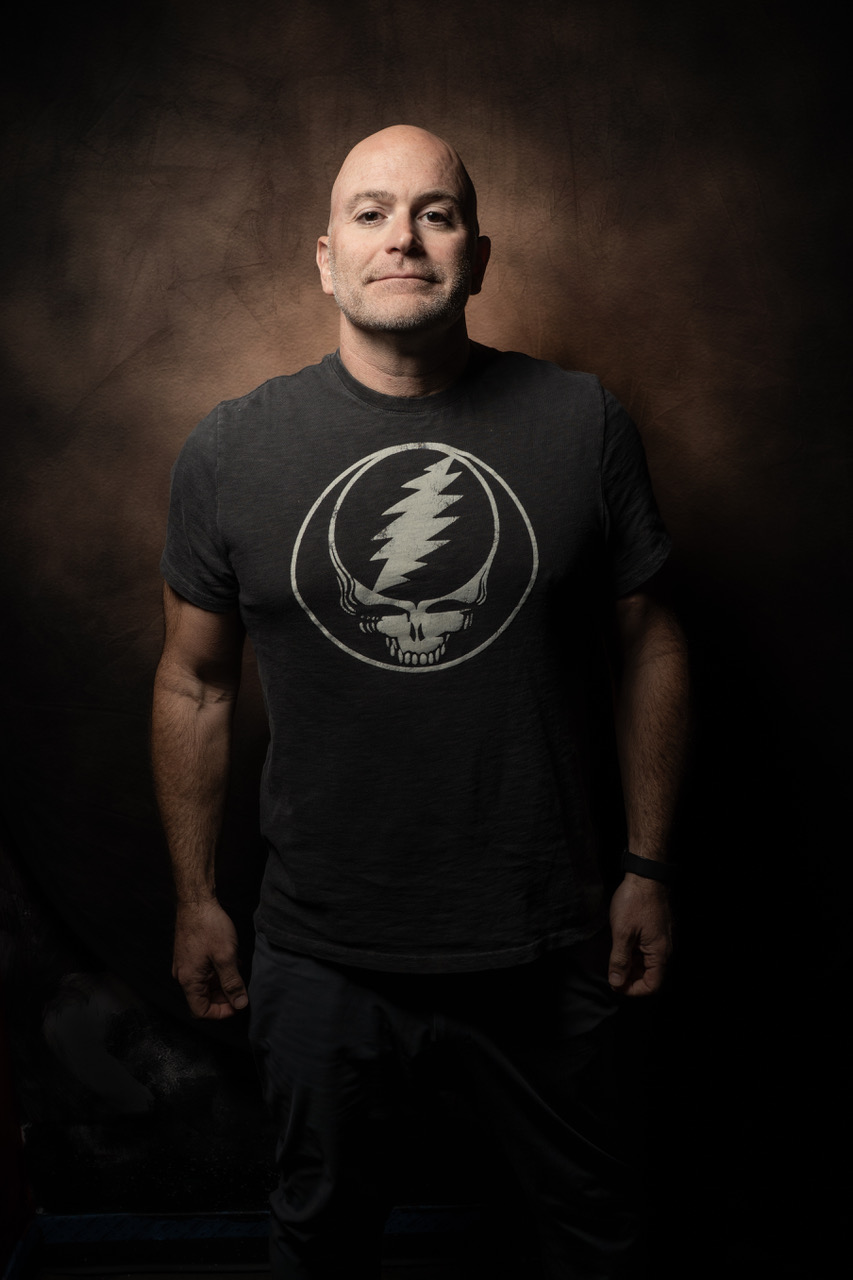
Mike Finoia, a comedian with over 23,000 followers on Instagram. Credit: Mike Finoia.
He started seeing a therapist, beginning a lifelong in-and-out-of-therapy cycle he dubbed “emotional blueballing.” In college he was prescribed the SSRI Paxil, which gave him jolt-upright nightmares. Thus began another on-again, off-again cycle—this time with antidepressants that “would only fix one thing at the expense of two others.”
In 2022, Mike found Depression MD, a mental health clinic in Milford. Run by Lisa Harding, an assistant clinical professor in Yale’s Department of Psychiatry, the clinic offers intravenous ketamine treatment for depression.
At his consultation appointment, where he was assessed as a candidate for ketamine treatment, Mike handed Dr. Harding a write-up of “everything”—the aching, the insomnia, the hamster wheels, the constant fear. “I told her my goal was just to feel okay,” Mike recalled. “If she said jump, I would have asked how high.”
He was also screened for physiological risks—a family history of psychosis, hypertension, and, crucially, any history or profile of substance abuse. Though it has a well-documented safety record as an anesthetic, ketamine carries serious potential both psychological and physical dependence. Frequent, high-dose use has been associated with impairments in memory and executive functioning, as well as damage to the kidneys and bladder. In severe cases, abuse has led to complete loss of bladder control and even surgical removal. After approving him, Dr. Harding started Mike on a regimen: ketamine twice a week for five weeks, then every two weeks, then monthly, then every two months.
“I told her my goal was just to feel okay,” Mike recalled. “If she said jump, I would have asked how high.”
There are two types of clinics in the ketamine treatment world. The first, which makes up the majority of clinics offering ketamine, I’ll call the “medical” model. They treat ketamine like any other pharmacological intervention, giving its psychedelic properties little, if any, therapeutic weight. Think beige walls and aggressively plastic waiting room plants. The second type I’ll call the “holistic” model. These clinics treat ketamine as, yes, a drug that alters your brain chemistry, but also embrace ketamine’s psychedelic side, believing that the insights the drug generates can have therapeutic import.
Depression MD falls squarely in the medical camp. Hooked to a ketamine IV, Mike would lie on a twin bed in a small, private room, monitored through front-facing glass by an attending physician. Ketamine, Mike said, was “spirit chemo.” As a dissociative, the drug induces a sensation of lightness—of reality a little less suffocatingly present and a little more gazing-from-afar distant. Experiencing even transient load-shedding was revelatory: “It felt like, ‘Oh my God. Thank God this place is here.’”
Dr. Harding also had Mike begin weekly cognitive behavioral therapy. If the ketamine experience was marked by lightness, the first weeks of CBT were anything but. “Digging deep and pulling up scabs and scars,” Mike and his therapist were miners chipping against the rockface of panic and anxious spirals that as he put it, “stood between me and happiness.”
Ketamine eased an otherwise “brutal process.” Being “open from the medicine, more malleable,” he was able to apply a new high-res lens to his thought patterns, recognizing his earlier internal programming as “completely distorted.”
Slowly, the lightness Mike felt on ketamine began to seep out of the clinic walls. One morning, a month into treatment, he woke up, for the first time in years, “actually feeling okay.” The sirens weren’t as deafening and the weights weren’t as crippling. And now, a rescheduled meeting wouldn’t trigger a self-deprecating tornado of “Why would anybody want to meet with me about anything? Stupid me for getting happy about something.” Instead, it was: no sweat, things happen, “there aren’t people sitting behind a computer going, ‘Let’s get Mike.’”
Mike stayed at Depression MD for a year and a half. He appreciated the sterility of Depression MD when he began treatment, feeling he needed a straightforwardly medical approach during his “bout of lethal depression.” But, once the clouds began to part, he found himself wanting more attention given to the ketamine experience itself. Alone in the IV room, he found his trips increasingly epiphany-laden. And try as his ketamined brain might to hold onto them, by session’s end they inevitably slipped away.
* * * * *
Mike found Centered, a mental health clinic in New Haven decisively of the holistic spirit. Think patchouli incense, a Dalai Lama quote inscribed on granite slab, fractal and mandala hangings.
At Centered, Mike’s sessions last three hours: preparatory talk therapy and intention setting, the “trip” itself, and additional post-ketamine talk therapy. There is no fixed regimen. In a follow-up “integration” appointment, usually within the week, Mike and his therapist decide whether and when to schedule another dose—typically, in his case, every six to eight weeks, depending on his touring schedule.
As part of the clinic’s emphasis on the therapeutic value of the ketamine experience, Centered’s five clinicians are more flexible with dosing than their medicalized counterparts. Whereas the latter typically administer up to 0.7 mg/kg for generic ketamine—or up to 84 mg for Spravato—Centered’s doses can reach up to 2.0 mg/kg. Patients usually start at around 0.5 mg/kg, then work with their therapist to adjust the dose to what feels most therapeutically meaningful. Because the clinic uses generic ketamine, they can also treat patients who don’t meet Spravato’s strict eligibility criteria—treatment-resistant depression or major depressive disorder with active suicidal ideation. “The idea,” said Robert Krause, Centered’s co-founder and clinical director, “is not to miss out on what the drug makes possible.”
But, at Centered, the ketamine experience itself is only one piece in the puzzle. “You have this profound experience, but then you go back to your life, to what’s causing you distress,” Dr. Krause said. “That’s when the real work begins—integrating the experience with psychotherapy and your day-to-day.”
A difficulty with Centered’s model, though, is cost. A Spravato session is typically covered by insurance. But because Centered uses generic ketamine, an individual session costs $150 to $250 out-of-pocket. To make treatment more accessible for its clients, 40 percent of whom are on Medicaid, Centered offers weekly $50 group sessions, where eight to ten patients are dosed together in a single room.
I sat in on one of these. Across Centered’s couches, patients sat chatting, scrolling, meditating. In the dosing room, eight thin mattresses lay directly on the wood floor in a loose U-shape, all beneath draped strips of red and white fabric that gave the room a feel somewhere between a ceremonial pavilion and a carnival tent.
The session began with a Dr. Krause-led meditation and round of how-are-you-feeling-todays. Cherubic-faced graduate student: anxious about the semester starting. Man, sixties, silver stubble and blue beanie: overwhelmed and depressed, difficult week at work. Next, intentions. Suburban mom with creative writing MFA: “To release the overwhelm of what’s not serving me.” White-haired bubby-type with walker: “To avoid falling into an anxious-depressed spiral.” Finally, Dr. Krause: “To keep your body safe so your mind can do what it needs to.”
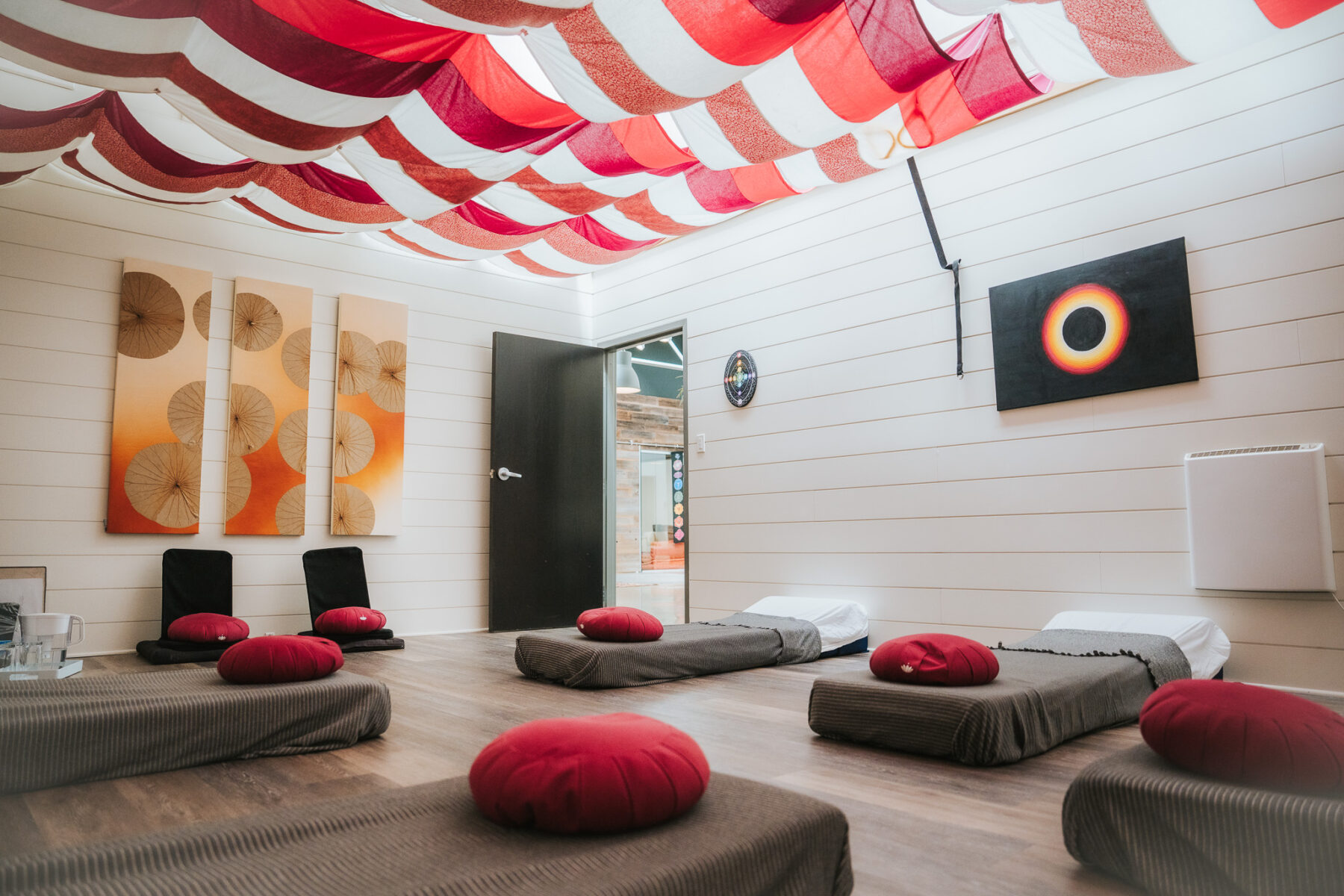
Centered offers weekly group ketamine therapy sessions. Credit: Gavin Susantio
After patients had laid down and donned eye shades, the speakers revved to life—a twenty-twofold repeating mantra: I release control and surrender to the flow of love that will heal me. Dr. Krause, with blue surgical gloves now, made his way around the U, metal needle-laden tray in hand. The music transitioned to chanting over shaker percussion, then to a light flute-keyboard-guitar trio over birds, rain, insects. Most patients were cocooned, scarcely moving. To my left, the hands of an Andy Serkis doppelganger rose and fell, fluttering megachurch style, while a woman who arrived near-tears despondent started feet-dancing to the music with a euphoric grin. After an hour, Dr. Krause’s voice appeared over the music. He led another breathing exercise—inhale, bring hands up to ceiling, allow chest to open up, release, repeat— and round of how-are-folks-doing.
When I first began researching Centered, I hadn’t planned to get thrice-dosed myself. But facts and figures are one thing, experiential knowledge is another. Call it journalistic rigor, or what have you. Plus, though after three years, I hadn’t given up on Lexapro entirely, it had, at best, made the anxious-depressive bouts only marginally tolerable, and even then only sometimes.
Paired with Dr. Mark Landreneau, my first experience, at 0.5 mg/kg, was a toe in the water: the occasional color pattern, a rocking-chair sensation, and an expressionist rendering of my eleven-years-passed grandfather’s face—after which, Dr. Landreneau tells me, I proposed doing ketamine with my 90-plus grandmother. For the second session, we upped my dose to 0.8 mg/kg. This, my friends, was a proper, capital-T Trip. I was lightspeed-personified, shot through a Rainbow Road technicolor tunnel. I was the last puzzle piece of a set which, after I clicked into place, turned out to be but one of infinitely many in a shimmering green fractal pattern, which I then promptly fell gravity-sucked into. I was grizzled, greying, eighty years old, assuring my collegiate self that all told, I was doing this whole life thing just fine. Driving me home, as I sat still space-cadet glowing, my friend remarked that I wore the sly grin of “a Renaissance monk who’s the only one in on some Great Cosmic Joke.”
In the two to three days after, I felt more motivated, calm, light, present—and the usual to-do list churn suddenly felt so obviously anguish-unworthy. I also attended a group session, but when the ketamine took hold, I seemed to have left the realm of earthly recollection entirely. What I can offer, though, is a reflection from one of that morning’s fellow trippers: that while I was who-knows-where, he had been a snake who shed seven skins, and was now feeling almost comically rejuvenated.
To date, Dr. Krause has treated more than 275 patients with ketamine. Only two had adverse reactions, he said, and they were devout Christians who reported visions of hell during their sessions. He estimates that Centered’s five clinicians have treated over four hundred patients with ketamine. Many arrive from Yale New Haven Health’s program, Dr. Krause told me, explicitly seeking a scenery-change from its “medical” model.
Centered’s approach was exactly what Mallory O’Connor needed. A single mother from New Haven, Mallory, who spent her late teens and early twenties selling tie-dye socks at Grateful Dead shows, is no stranger to psychedelia. Mallory has treatment-resistant depression and PTSD. Sexually abused as a child and domestically abused as an adult, she described weeks spent on autopilot, “constantly living inside the trauma.” Antidepressants, when she tried them, did more harm than good, while therapy only heightened her anxiety: “reliving trauma again and again and again, and nothing would change,” she said.
Two years ago, during a recreational ketamine experience, Mallory awoke in a purple room filled with boxes, each containing a vivid scene of past trauma. Pulling them out, she found she could look at them head-on with newfound distance and clarity. The realization followed: “If I don’t clear out all these boxes of trauma,” she recalls thinking, “I can’t make room in my life for joy.” She contacted Centered soon after.
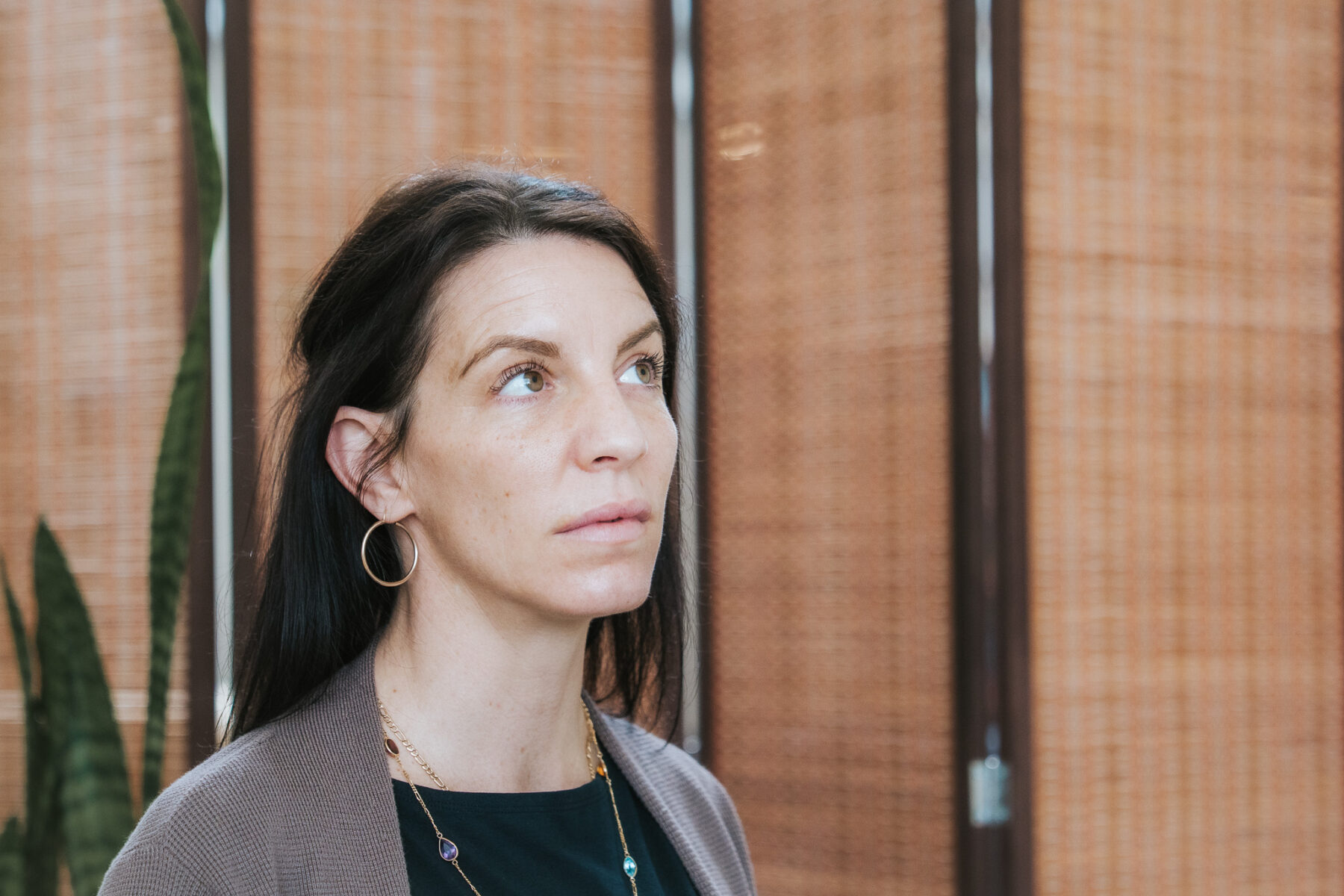
Mallory O’Connor is Centered’s Lead Ketamine Assistant. Credit: Gavin Susantio
Mallory began biweekly high-dose sessions, where she would “go deep and find all these things I needed to work on.” Between them, she undertook smaller-dose sessions, each devoted to working through a single traumatic memory. Ketamine’s dissociative effects, she told me, enabled distance from ego and shame—letting her view a memory like a cable rerun of an old film, “rather than continuously living inside those moments.”
After a month of treatment, the past receding, Mallory noticed she was tapping into the high-dose ketamine state of “ease and relaxation” more and more. She returned to concert-going, took up yoga, and now works at Centered as a ketamine assistant. This winter, she said, is the first in years she’s leaving the house—taking her kids sledding on weekends.
Where she once spiraled—“why did I make these bad decisions, why have I been this person”—compassion now prevailed: “I was able to see myself as a child rather than as an adult who went through this and suffered because of it. And I didn’t want to suffer.”
* * * * *
Mike confronted imminent wall-induced death and learned to relinquish control; Mallory opened the purple room’s boxes and was able to process what she pulled out. But were these experiences actually what alleviated their depressive symptoms? For many lab-coated, dot-your-i’s researchers, the answer is: probably not.
Existing research has found that neither the intensity of subjective ketamine experience—dissociation, derealization, visions—nor increased dosage consistently correlates with antidepressant effects. Dissociation, rather than being causally therapeutic, may simply signal that ketamine has elevated glutamate levels sufficiently to trigger antidepressant effects.
When I told Mike that, he laughed. He said that ketamine’s “little journeys” impart wisdom, which, he quipped, can’t be said of Zoloft. “Ketamine reminds me of a better existence,” he said, “of what actually matters, of why I’m even on the road in the first place.”
Researchers, though, are skeptical. “People build narratives and explanations for why things happened to them all the time, and the more disorienting or abnormal the experience, the harder the mind works to make it coherent,” said Chris Pittenger, co-founder of the Yale Program for Psychedelic Science. “People will say, I had this insight, and that’s why I’m living differently now.” But it might be the other way around: patients might find themselves living differently and “retroactively sculpt those memories to explain the change.”
But some patients don’t ascribe as much weight as Mike to ketamine’s psychedelic effects. Jen Spiegelhalter—53, charcoal hair, oval glasses, radiant warmth—found Spravato after unsuccessful stops at every station known under the antidepressant sun. With it, her mood began to lift, motivation returned, and a decades-long hopelessness started to recede. “I realized that if my depression comes and goes, the same is true of the good times,” she said. “I had never thought that way before.”
Jen’s sessions are rarely marked by revelatory visuals. Instead, she attributes most of her progress to a ketamine-induced feeling of her “soul filled with helium,” which she continues to float on in the days that follow.
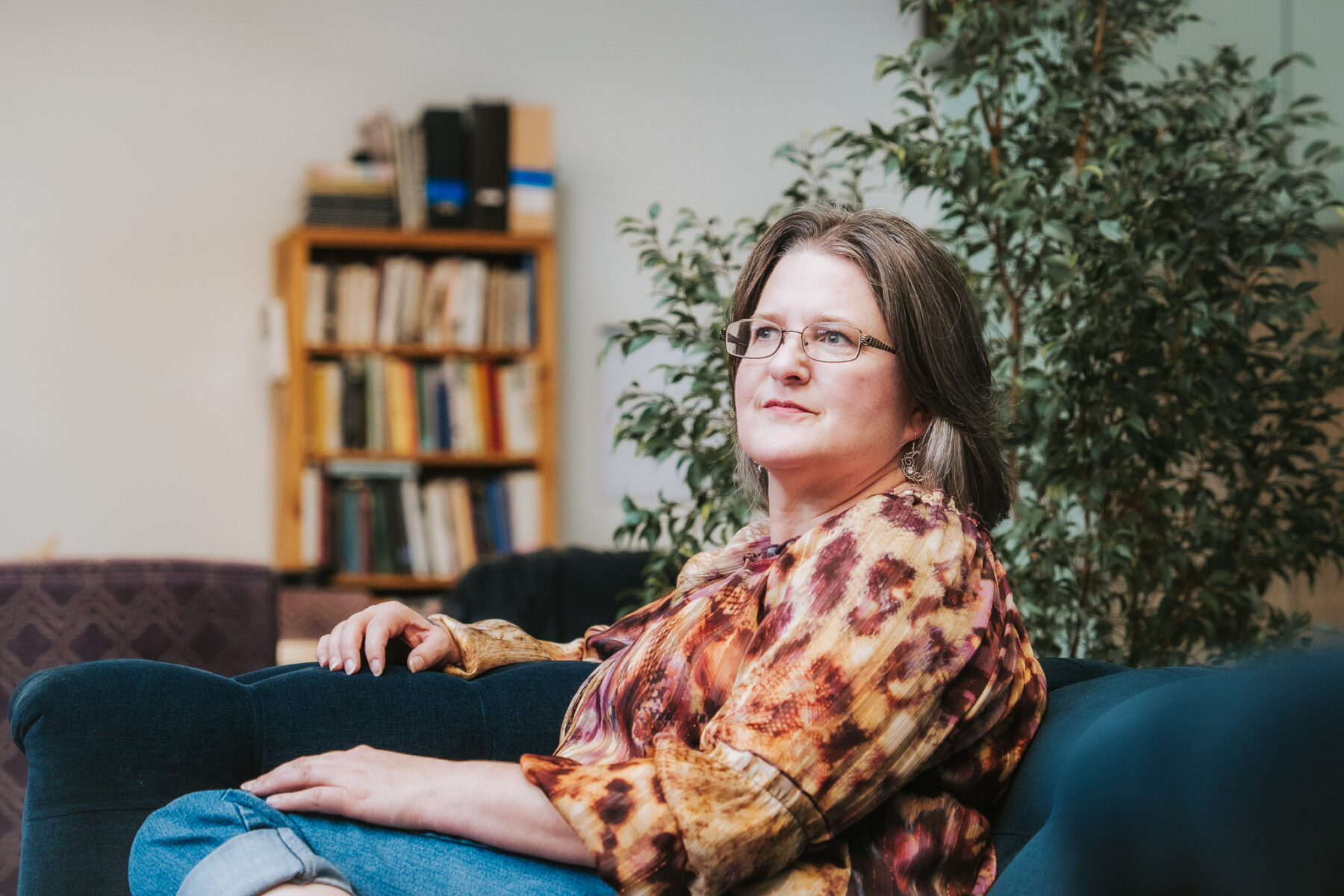
Jen Spiegelhalter receives ketamine therapy from Centered. Credit: Gavin Susantio.
The most robust data on long-term risks of ketamine treatment comes from a safety review of the Spravato clinical trials, where participants received esketamine twice weekly for four weeks, followed by maintenance dosing. On average, treatment lasted three and half years, over the course of which cognitive performance across memory, executive function, and reaction time remained stable. The review also found no evidence of abuse, misuse, or withdrawal in the trial context.
To date, though, no clinical studies have examined the long-term safety of off-label, higher dose ketamine regimens. As a result, the jury’s out as to whether the favorable safety results of the Spravato trials generalize to practices like Centered’s. There is also the risk that higher doses, by producing more intense experiences, can unsettle patients not adequately prepared. “I’ve had experiences treating patients who’ve had very dysphoric reactions—saying they wanted to die, horribly anxious, in really terrible places, then two hours later they were fine,” said Gerard Sanacora, professor of psychiatry and director of the Yale Depression Research Program. “I don’t think that risk should be minimized at all.”
Addiction is also a concern with higher-dose regimens, especially with recreational use on a steep rise. (The total weight of ketamine seized in the United States increased by 1,116 percent between 2017 and 2022.) “I’m always a bit worried that twenty years from now, ketamine will be used the way opiates are—so widely available that more and more people access it non-medically,” said Ilan Harpaz-Rotem, professor of psychiatry and psychology at Yale
Neşe Devenot, a researcher in the psychedelic humanities and writing instructor at Johns Hopkins, is focused less on the physiological concerns than the ethical risks of the Centered-type approach. They argued that psychedelic therapy tends to attract two demographics: desperate, vulnerable patients, willing to try anything after all else has failed; and self-styled gurus with totalizing, pseudo-scientific frameworks for understanding suffering and the therapeutic process. Further, psychedelics make patients more easily influenced: as early as 1964, psychiatrist Sidney Cohen had observed that patients under LSD tended to affirm “the fondest theories of the therapist.” Against the backdrop of psychedelics being cast as the “future of mental health care,” Devenot argues the terrain is ripe for unethical practices and coercive dynamics.
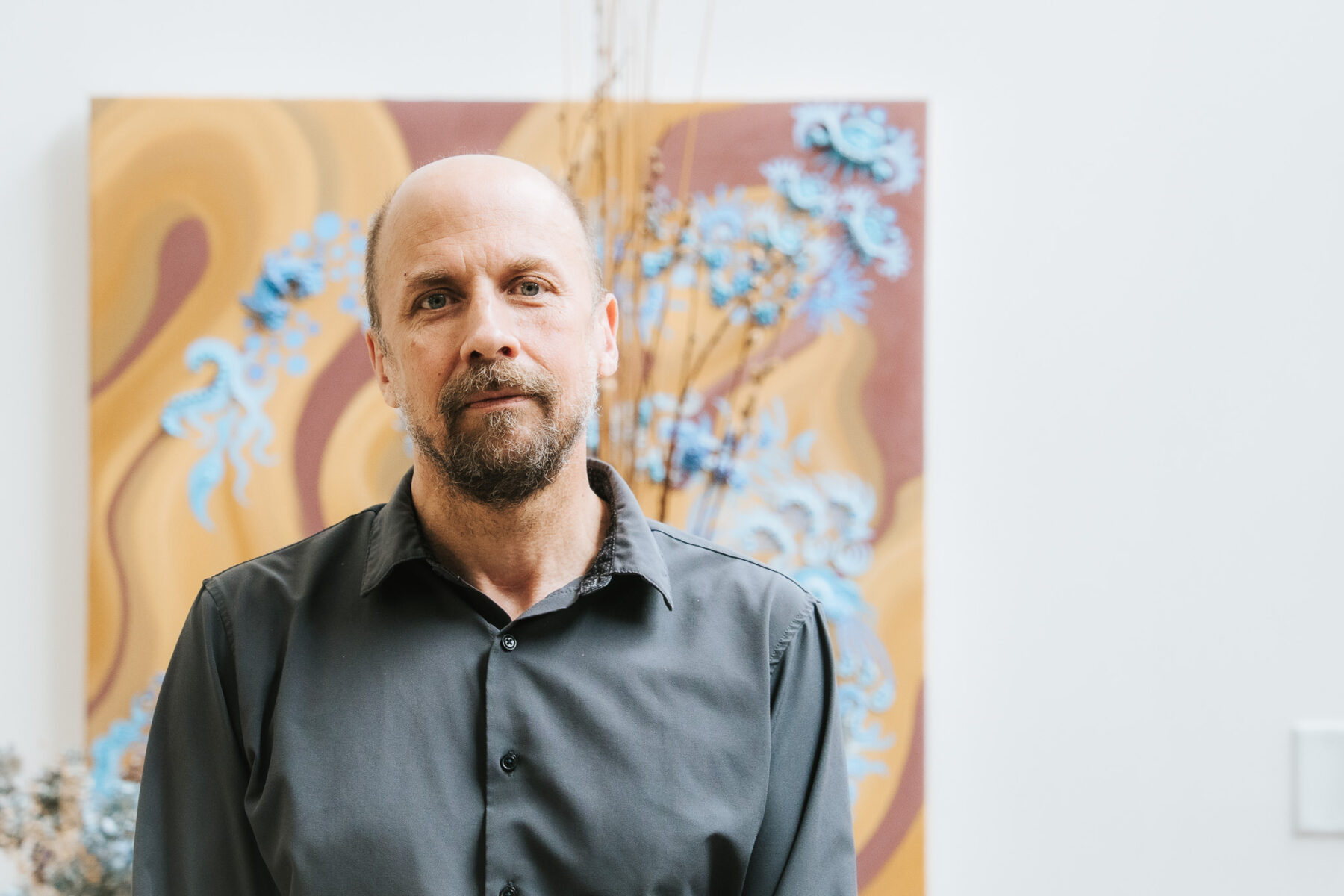
Dr. Robert Krause is Centered’s co-founder and clinical director. Credit: Gavin Susantio
Devenot pointed to the ketamine-assisted-therapy practice of San Francisco–based therapist Veronika Gold. Trained under the MDMA-assisted therapy model developed by Lykos Therapeutics, Gold has written about using a practice known as “focused bodywork”—using touch to intensify distressing sensations, believing that trauma must be “fully experienced and expressed” to be discharged and healed. In one interview, she said her therapeutic intuition means “they don’t have to be talking to me” for her to use focused bodywork. Gold did not respond to a request for comment.
Dr. Krause agreed that malpractice is a real risk for the high-dose-plus-psychotherapy model. To mitigate it, he said, he sees his role as a trail marker, orienting rather than directing. He also underscored that most psychotherapy at Centered occurs in the days between sessions or after the drug’s acute effects have worn off. When psychotherapy is conducted during the ketamine experience itself, the doses are always very low, like those Mallory received in her trauma-focused sessions. Physical touch, such as a hand on the shoulder, is used sparingly and only with explicit verbal consent established beforehand.
Nevertheless, Dr. Sanacora echoed some of Devenot’s concerns. He described some of the first conferences after psychedelics re-entered the academy in the late 2000s: bug-eyed peers nodding in unison to “we’re so lucky to have the chance to prove this works,” while Sanacora played voice-of-temperance, reminding them their job was to see if the drugs were effective and safe. “People would say, ‘these drugs are very unique.’ And I’d remind them: every drug is unique, but there’s nothing exceptional about it,” he said. “You don’t get exceptions. You still have to follow all the same rules.”
Ketamine’s addiction profile, the potential for malpractice, and lack of long-term safety data for higher-dose regimens have led many to side with Dr. Krystal. Though he admitted it’s possible clinical trials will eventually lend support to the Centered-type approach, he thinks that, given existing research, the holistic clinics might be administering doses that tilt the risk-benefit balance in the wrong direction.
Dr. Krause, however, considers that conclusion premature. “In the quest to be objective, they haven’t objectively evaluated the subjective,” he argued. “They say including things like music or therapy make the data messy.” But, drawing from a decade of therapeutic practice with ketamine, he thinks that such factors are crucial to unlocking the drug’s full potential at higher doses. “So my response would be: we don’t yet have the data to say that the subjective aspects don’t add anything. How do you know that? Did you actually do those studies? No, you didn’t.”
To date, there have only been two studies that have randomized psychotherapy paired with ketamine treatment, neither of which found that psychotherapy offered added benefit. However, both had small sample sizes, and neither were intentional about the features of “set and setting”—psychedelic-speak for the patient’s mindset, music during the trip, physical environment—that Krause considers integral to clinical outcome.
The disagreement between the Krausians and the Krystalians, though, runs deeper than deciding between two approaches. It also reflects fundamentally different conceptions of psychiatry’s ends. “I’m not just trying to tweak neurotransmitters,” Dr. Krause said. “I’m trying to use ketamine to help them move from being shut down and closed off—hypervigilant, hyper-reactive—toward reconnecting, in a lasting way, with meaningful things in the world. Maybe that’s not what some people would call psychiatry, but that strikes me as narrow-minded.”
Too often, Dr. Krause said, psychiatry treats depression as an individual defect—“you’re broken in this or that way; let me just give you this drug”— rather than asking what in a patient’s life might be driving their distress. Though ketamine can’t address these social factors on its own, Krause added, “by integrating intense experiences with therapy, it can change your relationship to yourself and to what you’re suffering with.”
A number of companies and research groups, though, have already put their chips squarely in the Krystal camp. They’re trying to develop next-generation psychedelics that preserve therapeutic efficacy while minimizing psychedelic effects, but in ketamine’s case, have to date come up empty handed.
But Dr. William Richards DIV ’65, who helped revive psychedelic research in the late 90s, thinks psychiatry is on an inevitable march towards Krause’s outlook. “The science is a little embarrassed about bumping into this spiritual stuff,” Richards said. “The cutting edge is brushing up against what’s called the sacred, and with that will come the need for new models and new languages.”
* * * * *
During our last call, I shared my ketamine experiences with Mike, who said he’s begun weaving his therapeutic journey into his comedy. Though “talking about crippling depression” isn’t what all ticket-paying audiences come for, he wants those who need to hear it to know that “the tools are here, the help is here.” And while it’s not as if “the whole crowd lines up and goes, ‘tell me more, sensei,’” two or three people will often come up after shows to ask for advice. Others reach out on social media.
He tells them a few things. First, that comedian is far from doctor, and they should start by talking to one. Second, what worked for him might not work for everyone. And finally, it’s not for the faint of heart: “I think this type of thing is for people who are really, really serious about changing their life,” he said. “This isn’t doing an eighth of mushrooms in the park.”
But in Mike’s case, at least, the experience has been metamorphic. When he first got the IV at Depression MD, the needle sent him stone-cold to the floor, doctor yelling for help as he sobbed, apologizing for “not even being able to heal.” Now, he’s channeling Bob Dylan in My Back Pages: “I was so much older then, I’m younger than that now.”∎
David Rosenbloom graduated in December. He was in Saybrook College.
This project was supported by the Edward B. Bennett III Memorial Fellowship.