

An extravagant invertebrate biology class turns spiritual.
I am lost. The edges of my contact lenses have dried because I’ve blinked so little in the last five minutes. I have been staring down the barrel of my microscope, entertained—no, enthralled—by a spherical Echinoidea. In plain terms: a sea urchin.
I’ve seen you before, I think––in the dramatic YouTube documentary about declining populations of sea otters, through the glass of the Monterey Bay Aquarium kelp forest, neatly cracked open atop my birthday sushi boat.
But this is different. Each sea urchin limb follows its own choreography. Hinges bend, pincers clamp, tube feet wriggle. It’s a spectacle that I am only beginning to learn about.
Do you feel with those tube feet? Are there thoughts in that decentralized brain? What do you remember from being young and adrift?
—–
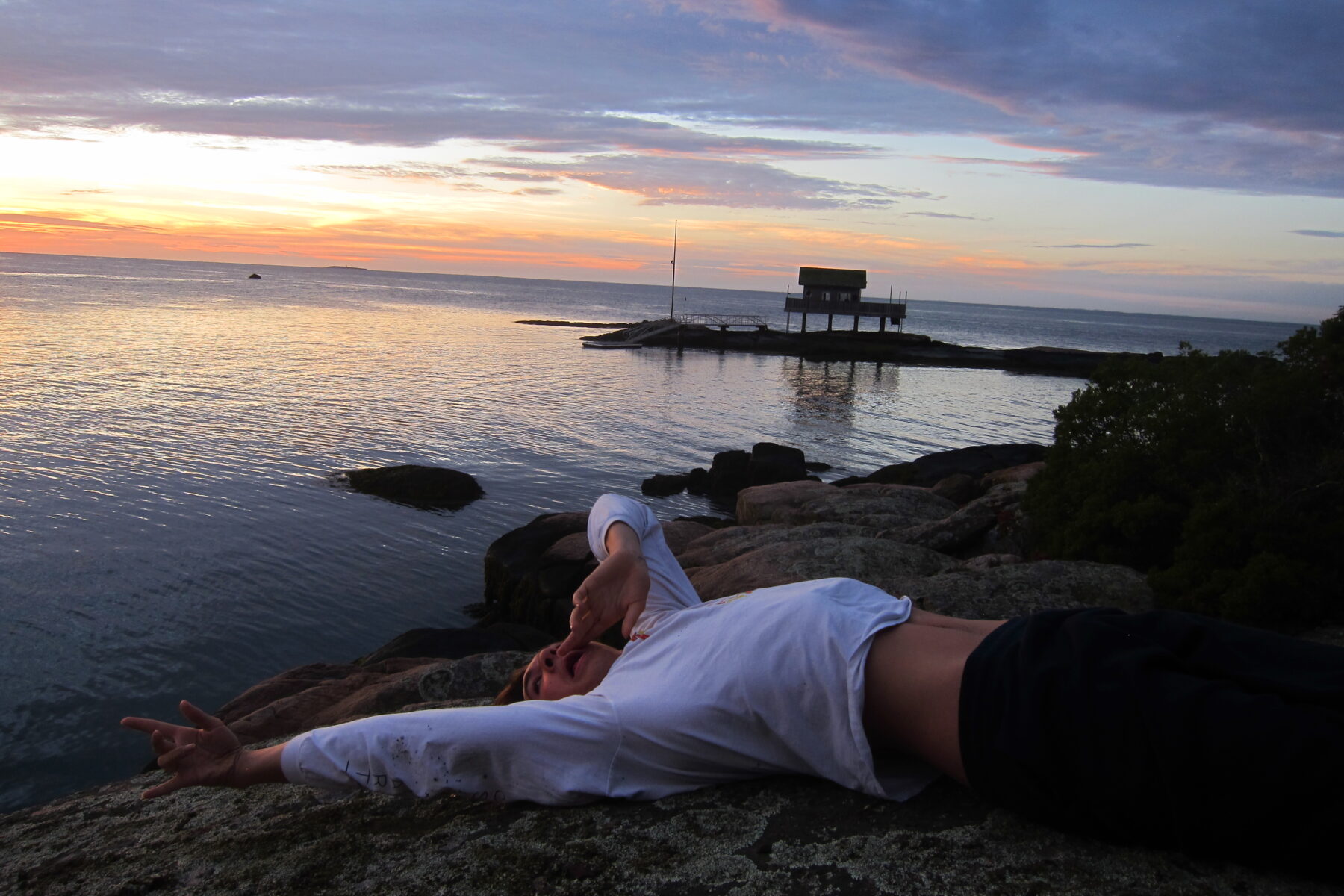
In Casey Dunn’s class, EEB 2235: Invertebrates, I learned there is mystery in the mundane. Things that were lumps on my dinner plate became organisms that had complex relationships with one another. The class met twice a week: Tuesdays were indoor lectures and, weather permitted, Thursdays were spent at Yale’s private research station on Horse Island. Located on the Long Island Sound, Horse Island is part of an archipelago the Indigenous people of Mattabesett called “the beautiful sea rocks.” Yale acquired Horse Island in 1972 to conduct its experiments. Despite the island’s long history, my Inverts cohort was the first class from Yale to visit on a weekly basis.
Do you feel with those tube feet? Are there thoughts in those central brain? What do you remember of being young and adrift?
At 12:15 p.m., Bob, a burly sun-reddened boatsman, would park the 14-seater ferry by the floating dock. He rarely acknowledged us (I once tipped him $10 and received only a slight nod in return), and 15-minutes of ferrying later, we would arrive on the island.
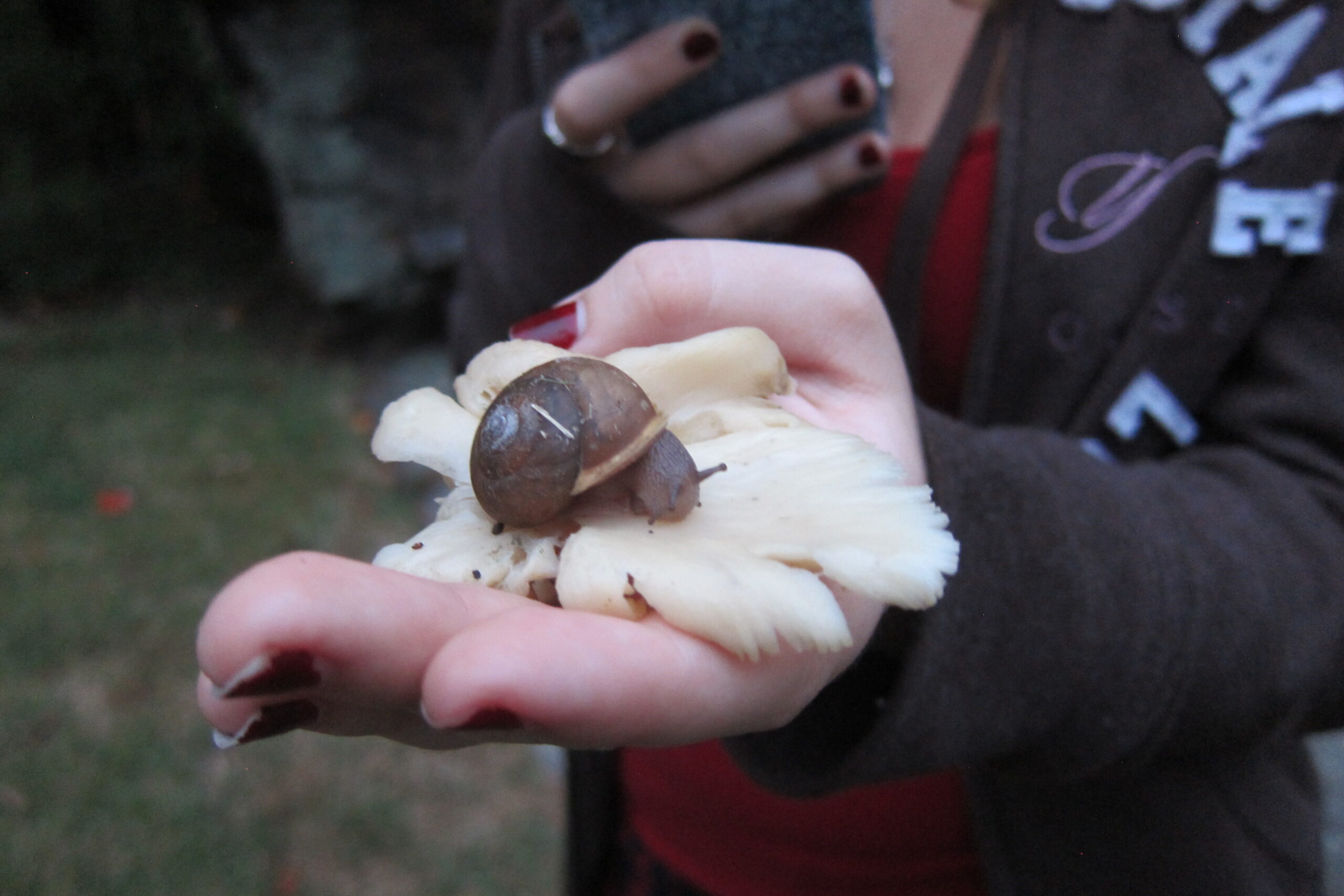
As our feet marched the plank bridge onto the island proper, a small exodus of little things with many legs—crabs, isopods, and jumping spiders—retreated to rock crevices. Immediately we were intrigued by the spiral form of the channeled whelk—a thick-shelled, spiny conch-shaped snail. These fist-sized shells, some empty and some still inhabited, were strewn about, half-buried, waiting for a curious hand to pick them up.
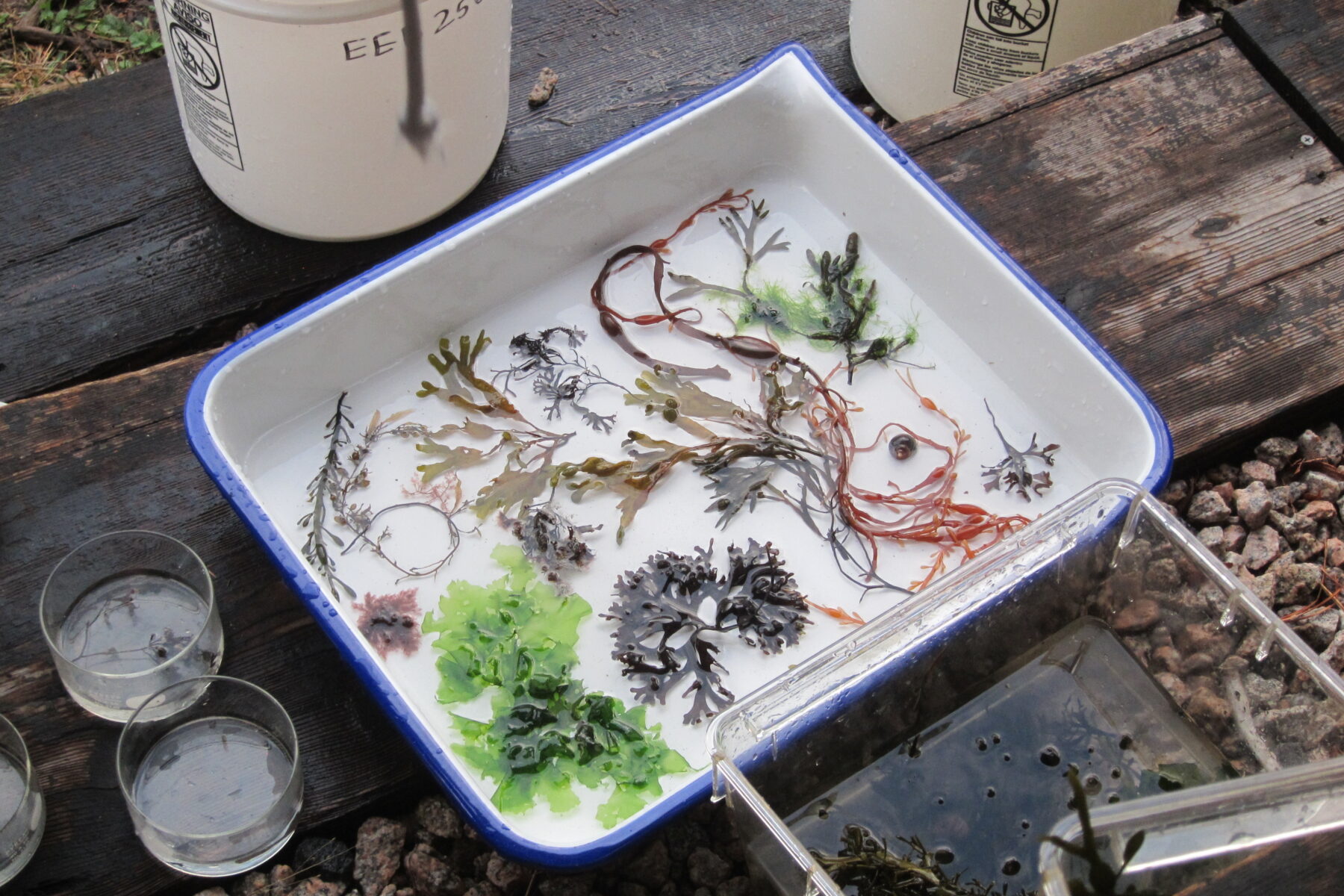
For Lynna Thai, a junior Ecology & Evolutionary Biology major, her experience of the class got “very spiritual and religious,” she said. “Because the universe manifested for this thing to be able to experience itself. And I think that is so beautiful.” She also “learned a “freakish amount” about barnacles, which she admits is a niche interest. Although our class released most of our specimens after brief field sketches, we brought some back to the Peabody Museum of Natural History for further research and display.
Some specimens live in public display cases, but most pickled jars of weirdness hang back in the invertebrates research collections, which Eric Lazo- Wasem, the senior collection manager, has been curating for 43 years. “I don’t really like to eat lobster much anymore,” he said.
We’ve come a long way since the days of unsustainable, unethical harvesting, according to Lazo-Wasem. Before the concept of sustainable research was introduced, it was common for researchers to trawl bucketfuls of invertebrates, cherrypicking through the bodies for several specimens of interest and dumping the rest. He laughed while recalling an arctic voyage from years ago when a sampling trawl snagged dozens of octopuses. When Lazo- Wasem and his colleague, Saybrook Head of College Thomas Near, released a 4-meter-long octopus, their Russian colleagues were upset that they’d lost their prospective dinner.
Once, we were studying a live horseshoe crab when it took a suicidal leap from its ice tray to the vinyl floor. Distraught, we picked it up and plopped it back into ice where its legs passively hinged and wriggled to no avail. Then we continued our blood-sampling procedure, jamming a needle into the soft keratinous membrane under its carapace.
In a high school AP Environmental Science debate, I argued against live harvesting horseshoe crab blood. The blue-tinted substance is widely used in biotechnology and microbiology for its ability to detect bacterial contamination in vaccines. In 2022, an estimated 145,920 horseshoe crabs were killed for the biomedical industry. And like an oil rig upon loads of petroleum, I, too, was complicit in extractivism. We presently do not know and cannot fathom how it feels to think like a horseshoe crab. (Lazo-Wasem also doesn’t think we can answer this question yet.)
Back in the lab, I stared into the crab’s compound eyes, which were dulled by the anaesthetic ice chips. I remembered the gleam of a tiger’s eye bead on a necklace I had been gifted by my grandmother as a child, the way the shine shifted in the light. As I shamefully plated the horseshoe crab’s blood onto a microscope slide, I felt its eyes shifting. They seemed to follow me to the sharps container, where we discarded the hypodermic needle, still dripping with blue ink. Wasteful.
The incident disturbed the entire class. “I value life highly,” Thai said. “This is morbidly said, but to have desecrated it in the way that we did, I felt very guilty about it.”
Namrata Ahuja, a graduate student working in Dunn Lab and occasional Inverts teaching fellow, remarked that her 2021 class, though upset by the horseshoe crab dissection, was “not as distraught as people this year were about it,” she remarked. She attributed the difference to “interacting with the animals outside of class in the field versus just having them in the lab.” We, the spined, and them, the spineless, were really not so different.
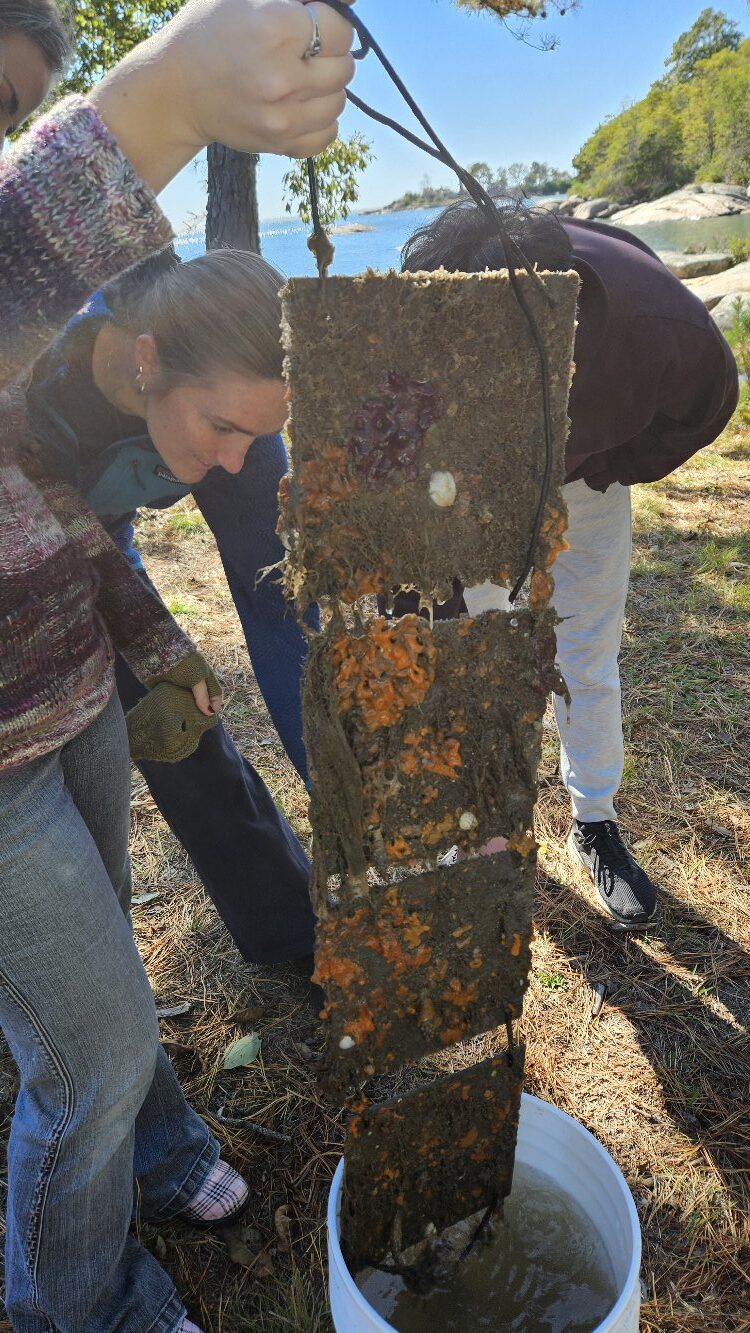
I think of dock scum, the crud-encrusted surfaces boat owners fight to destroy. Five months before our class began, Professor Dunn submerged several ceramic tiles strung on rope into the ocean, allowing their surfaces to become overgrown with stuff our class could examine. When we pulled them up, the tiles only seemed to be mud-covered plates, brown and goopy. You could see some wiggling, if you looked closely.
Well, I looked closely. I saw a million forms of life I couldn’t even name. There were feather worms, polychaetes, colonial tunicates, amphipods—more animals than faces I could recall. More animals in one square inch than people I had ever met. Ever would meet.∎
Michelle So is a sophomore in Timothy Dwight College.
Photos by Michelle So.
